The Remarkable Influence of Bob Taylor: The Man Behind Modern Computing Part 1 of 4
SUMMARY: In this four-part series, I shine a light on one of the unheralded heroes of the computer age: Robert Taylor. Although he is unknown to many, his innovations have changed our lives in innumerable ways.
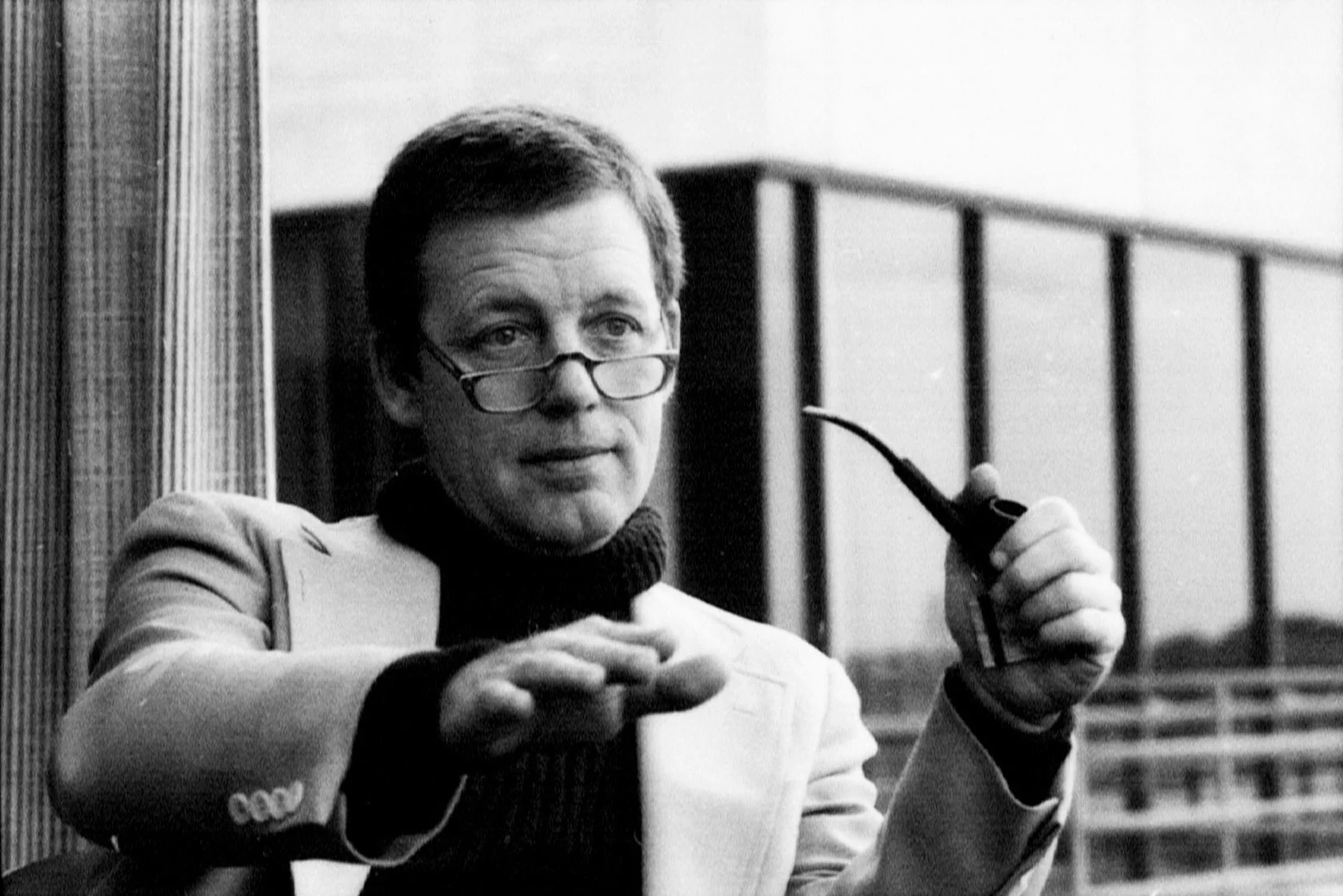
Bob Taylor: not a name most are familiar with, but in the history of computing, few have had a farther-reaching impact. So much of the landscape of computing dwells in this one man’s shadow. Let’s look at his story through the lens of four transformative technologies that he helped midwife into existence: timesharing, the ARPAnet, the GUI, and Internet Search.
Born in Texas in 1932, what’s most remarkable about Bob Taylor is that he wasn’t a computer scientist at all – he was a psychologist by training with minors in math, philosophy, English, and religion. He was not a computer guy, but he had a remarkably agile mind and an ability to see the potential in ideas that others did not. He was a visionary who made his name not for his own research but for managing the research programs of others, where his wide-ranging intellect, curiosity, and vision came into play.
One of the researchers whose work he managed and guided described him as a “concert pianist without fingers.” A historian describes him as follows: “Taylor could hear a faint melody in the distance, but he could not play it himself. He knew whether to move up or down the scale to approximate the sound, he could recognize when a note was wrong, but he needed someone else to make the music.”
From very early on he was convinced that the ultimate potential of the computer was not as a soulless number-crunching machine but as a communication device. This insight would shape all the research he would guide and influence.
Timesharing
Taylor’s first brush with computers was in the late 1950s while finishing his master’s degree in psychology at the University of Texas. Researching how the brain locates and pinpoints the origins of sounds, Taylor had collected reams of data that he now needed to analyze. His adviser recommended he use his school’s new computer to aid in his analysis.
Dutifully, he took his data down to the school’s vast computer center. The student administering the computer center informed Taylor that, yes, he could use the computer, but he would first need to reenter his reams of data as holes in a stack of punch cards. Then the cards could be fed into the computer, the analysis performed, and Taylor could come pick up his results hours or even days later, depending on how busy the computer was at the time with other tasks.
Taylor was incredulous that this labyrinthine process was necessary to use the computer. He stormed out of the computer center and stubbornly performed his calculations by hand, using an electromechanical calculator instead.
Taylor had been hearing for years about these so-called “electronic brains.” But he knew brains – he had studied them! He saw very little similarity between the oversized calculator he had declined to use at the University of Texas and the human brain.
After completing his master’s degree, Taylor worked at a defense contractor on a missile system. While there he read an article by a man who would later become his mentor, J.C.R. Licklider. The article was entitled “Man-Computer Symbiosis” and it described interactive and robust computer systems being used not as calculating devices, but as aids to human thought and creativity. This vision inspired Bob Taylor: he had discovered what he really wanted to work on.
A few years later, Taylor would come work for Licklider at a government agency called ARPA, the Advanced Research Projects Agency. At the time, Licklider was the Director of the Information Processing Techniques Office (IPTO) at ARPA, an office that the US government was using to support and coordinate the development of a technology called timesharing.
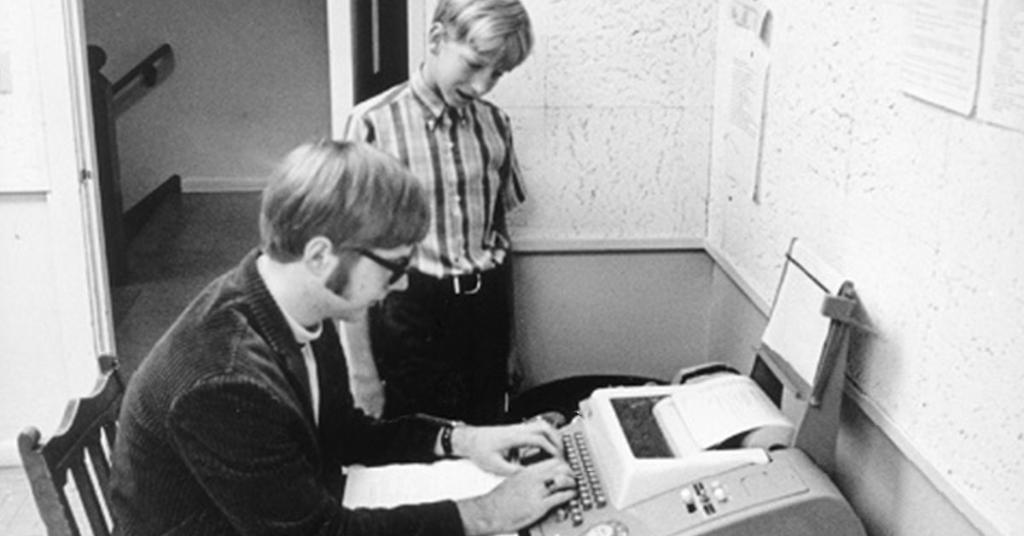
(Microsoft cofounders Bill Gates and Paul Allen got their first taste of computing connecting to General Electric’s timesharing service via a Teletype Model 33 ASR, the iconic terminal of the timesharing era.)
The problem in the 1960s was that there were far more people who wanted to use computers than there were actual computers to use. Many, like Taylor, were put off by the tedious requirements of computer use at that time: computers could only run one program at a time, so users had to queue up their programs and wait for the computer to process everything else in the queue. If you had an error in your program, you would have to correct it, resubmit your program, and wait all over again. It could take days or even weeks to get the results from simple programs in this fashion.
Timesharing hardware and software attempted to bridge this gap by allowing a single computer system to service multiple users at the same time. As commonly deployed, timesharing systems could support dozens or even hundreds of concurrent users on a single computer system, thus opening up computing access to many more people than before. Timesharing networks were, in many ways, the very first computer networks, and they paved the way for the explosion of computing in the 1970s and 1980s.
Furthermore, timesharing systems offered users a first taste of real-time interactive computing. Now, instead of waiting around at a computer center for hours, a user could enter a command at a terminal like a Teletype Model 33 ASR, press enter, and get a response from the computer within a few seconds! It didn’t matter if other users were on the computer at the same time; timesharing systems allowed computers to divide their resources among all the connected users, giving each one the impression that they had the computer all to themselves.
Both of these innovations of timesharing, real-time interactivity and computer networking, would figure prominently in Taylor’s work for the rest of his career as well as define the course of the computer industry to come.