The Remarkable Influence of Bob Taylor: The Man Behind Modern Computing Part 3 of 4
SUMMARY: In part three of this four-part series, I shine a light on one of the unheralded heroes of the computer age: Robert Taylor. Although he is unknown to many, his innovations have changed our lives in innumerable ways.
This is part three of a four-part series on the remarkable influence of Bob Taylor. If you haven’t already, check out part one and part two.
GUI
So Bob Taylor spearheaded the modern Internet, but his next project would be just as influential, if not more so. In 1970, Taylor took on a new role for the Xerox Corporation as the associate manager of the Computer Science Laboratory at Xerox’s new Palo Alto Research Center (PARC). Utilizing the connections he made while jumpstarting the ARPAnet, he surrounded himself with a cadre of the most brilliant and forward-thinking computer scientists he could find. Given a free hand by Xerox, Taylor and his team embarked on a simple mission with far-reaching implications: to make computers easier to use.
Of the numerous technologies invented at PARC under Taylor’s watch, none would change the course of the computer industry more than the graphical user interface (GUI).
The GUI attempted to harness what was in the early 1970s a novel capability for computers: the ability to draw graphics on a display screen. Taylor’s team at PARC wanted to use this new capability to lead the user through the process of operating the machine. Pictographic icons and the now-familiar mouse cursor replaced the arcane text commands, syntax, and programming knowledge that had previously been required.
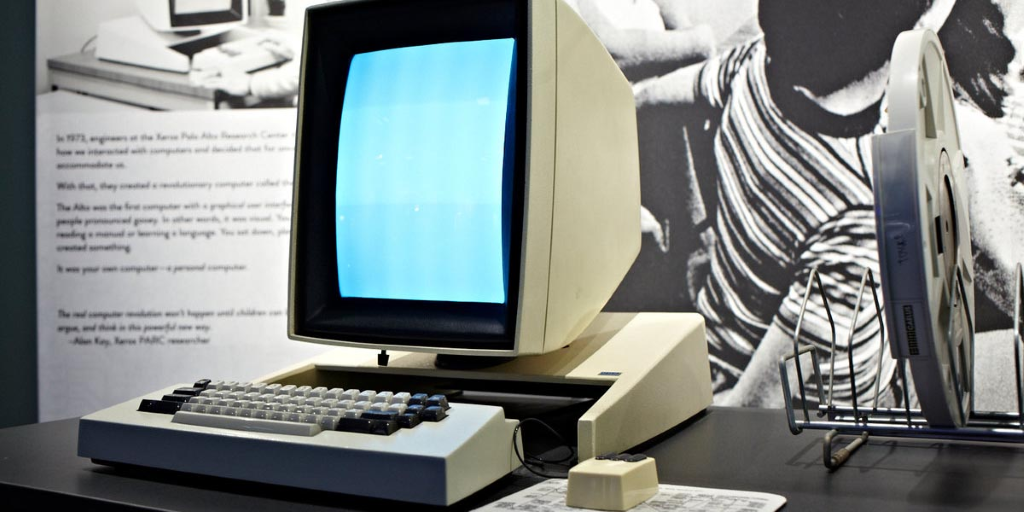
All the familiar elements that still define the GUI computing experience were developed at PARC during this time under Taylor’s leadership. His team built a prototype of what would be known a decade later as the personal computer, complete with mouse, keyboard, a fully bitmapped display able to render complex graphics on the screen, as well as robust local-area-networking capabilities. They called their prototype the Alto, after Palo Alto, and in almost every way except one it was the first modern personal computer; the only problem was that Xerox never sold a single one.
Xerox had thrown itself into the computer industry with reckless abandon, acquiring computer companies and hiring Taylor and his super-team of researchers and funding new research laboratories in which they could develop novel computer technologies. But Xerox corporate wasn’t quite ready for what Taylor and his team brought them. Executives didn’t see the potential of PARC’s Alto project and instead wanted to focus on selling gigantic and costly mainframes to businesses and universities, following the same business model as industry leader IBM.
So Xerox was never able to fully capitalize on the personal computer technology its own researchers had invented. After a frustrating few years trying to get the Xerox bigwigs to see the light on PCs, Taylor and most of his researchers left for greener pastures at more forward-thinking companies like Microsoft and Apple, or started their own companies like Adobe, 3Com, and Silicon Graphics – all utilizing technology originally developed at Xerox PARC.